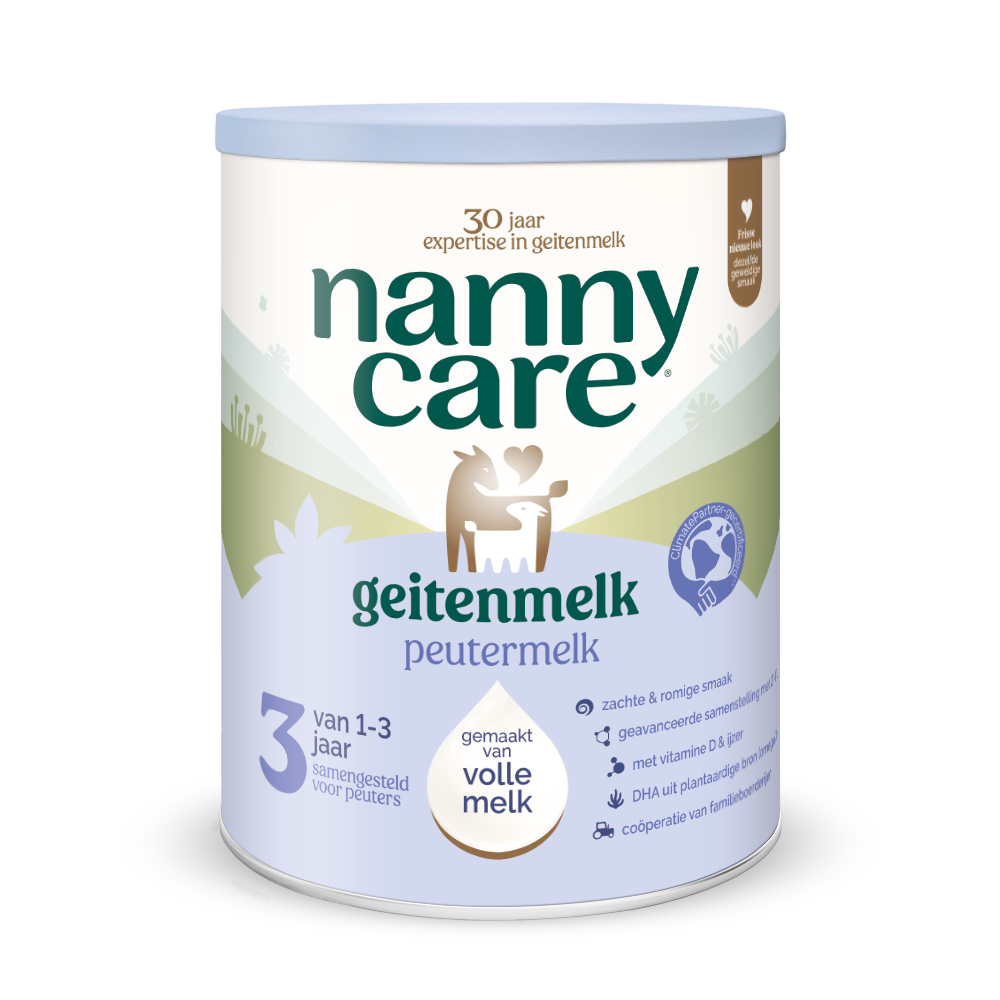
Nannycare Toddler Goat Milk 3 800.00 Gram
Nannycare Toddler Goat Milk 3 800.00 Gram
 Op voorraad
 Gratis verzending vanaf €70
 Bestel voor 21:00, morgen in huis
Couldn't load pickup availability
Retourneren
Retourneren
Wanneer u rechtstreeks bij ons koopt, willen we dat u 100% tevreden bent met uw aankoopervaring. We hopen dat u alles wat u van ons ontvangt geweldig vindt, maar als u niet 100% tevreden bent, kunt u elk artikel binnen 30 dagen na uw aankoop retourneren of ruilen. Neem contact op met een medewerker van de klantenservice als je bestelling niet naar wens is of niet aan je behoeften voldoet. We willen dit zo snel en gemakkelijk mogelijk voor je oplossen.
Stap 1: Vul de retourgegevens in op de achterkant van je bestelformulier. Kunt u uw bestelformulier niet vinden? Download dan een exemplaar van het retourformulier. Wilt u het product ruilen voor een ander product? Laat het ons dan binnen 30 dagen na aankoop weten.
Stap 2
Stuur de bestelling zelf terug via USPS, FedEx of een andere traceerbare verzendmethode. We raden u aan uw pakket te verzekeren. Stuur het naar: Gaiam Attention: Returns 9107 Meridian Way, West Chester, OH 45069
Houd er rekening mee dat het 14 dagen kan duren voordat wij uw retourzending hebben ontvangen en verwerkt. De oorspronkelijke verzend en administratiekosten worden niet terugbetaald. Wij zullen het bedrag van de geretourneerde artikelen en eventuele in rekening gebrachte belastingen, minus de oorspronkelijke verzendkosten, crediteren of terugbetalen. Neem contact op met de klantenservice voor meer informatie over ons retourbeleid. Aanpassingen op uw creditcardafschrift zouden binnen twee factureringscycli zichtbaar moeten zijn.
Bezorging
Bezorging
Besteld voor 21:00?
Je bestellingen wordt de volgende werkdag geleverd.
Gratis verzending vanaf €70 in NL
Voor bestellingen onder €70 worden de verzendkosten tijdens het afrekenen weergegeven.
Kwaliteit & veiligheid
Kwaliteit & veiligheid
Zorgvuldig geselecteerde producten
Wij selecteren onze producten zorgvuldig en werken met betrouwbare merken en leveranciers.
Kwaliteit staat voorop
Alle producten worden geleverd volgens de geldende kwaliteits en veiligheidsnormen.
Veilig betalen
Veilig betalen
Veilig & vertrouwd betalen
Betaal eenvoudig en veilig met beschikbare betaalmethoden. Je betalingsgegevens worden veilig verwerkt en beschermd.
Beschikbare betaalmethoden:
iDEAL, Visa, Mastercard, American Express, Postepay
Nannycare Toddler Milk is a specially formulated and enriched goat milk to support the daily nutritional needs of children aged 1 to 3 years. They need, among other things, calcium and vitamin D for normal growth and development of bones. Vitamin D also contributes to children's good resistance. In addition, this toddler milk contains vitamins A and C, which contribute to the normal functioning of the immune system. The milk formula is also enriched with iron, which contributes to the development of children's cognitive functions. Finally, the Toddler Milk contains the omega 3 fatty acid DHA (from a plant source) and the dietary fiber 2'-fucosyllactose (2"-FL).
Toddler milk based on goat milk is a good alternative to milk formula based on cow's milk.
The quality of Nannycare
The quality and taste of goat milk are influenced, among other things, by the diet and living conditions of the goats. For Nannycare's goat milk, a conscious choice was made for milk from goats in beautiful green, isolated and clean New Zealand. The goat milk comes from 69 small-scale farms, where the goat milk is produced according to very strict quality and hygiene standards. The goats on these farms only produce milk for infant formula and toddler milk. For this, they receive fresh feed that is specifically tailored to producing milk most suitable for (young) children. The fresh feed is grown by the farmers themselves and consists of a mixture of different forage crops such as grass, ryegrass, chicory, clover and alfalfa.
Whole, unprocessed goat milk
For Nannycare goat milk formulas, whole, unprocessed goat milk is used as a base without complex processing steps, such as those applied to the milk base in many other (goat milk or cow milk) infant formulas. Nannycare goat milk formulas are therefore closer to nature. Nannycare Toddler Milk is enriched with iron, calcium, vitamin C, vitamin D, DHA and 2'-fucosyllactose (2"-FL), among other things. 2"-FL is a fermentable dietary fiber of the oligosaccharide type that also occurs naturally in milk.
Only added lactose
Nannycare deliberately chooses not to use less favorable carbohydrates such as maltodextrin or glucose syrup like many other infant formulas, but exclusively uses the more expensive lactose to supplement the natural lactose content in goat milk to meet the energy needs of young children.
Scientific research
Scientific research has been conducted with Nannycare's goat milk formula, which has shown that goat milk is suitable for young children. This research has led the European Commission and EFSA (the European Food Safety Authority) to approve goat milk as a basis for infant formula and follow-on milk.
Ingredients
Pasteurized whole goat MILK, lactose (from MILK), vegetable oils (sunflower oil [high oleic], rapeseed oil, sunflower oil), antioxidants (sunflower lecithin, tocopherol-rich extract), pasteurized goat MILK powder, oil from the microalgae Schizochytrium sp., calcium citrate, 2-fucosyllactose (from milk), choline chloride, dicalcium phosphate, sodium citrate, L-tyrosine, calcium hydroxide, L-cysteine, L-isoleucine, iron sulfate, taurine, dl-α-tocopheryl acetate, L-ascorbic acid, zinc sulfate, potassium chloride, inositol, nicotinamide, cholecalciferol, retinyl acetate, L-carnitine, calcium-D-pantothenate, cyanocobalamin, copper sulfate, phylloquinone, thiamine hydrochloride, riboflavin, pyridoxine hydrochloride, manganese sulfate, folic acid, potassium iodide, sodium selenite, d-biotin. This product contains 38% goat milk solids (on a dry matter basis).
Nutritional value
Nutritional value per 100 ml prepared food:
|
Ingredient |
per 100 ml |
RI* |
|
Energy |
||
| Kilojoules | 250 kJ | |
| Kilocalories | 59 kcal | |
|
Main components |
||
| Fats | 3.1 g | |
| of which saturated | 1.1 g | |
| of which monounsaturated | 1.5 g | |
| of which polyunsaturated | 0.48 g | |
| - Linoleic acid | 360 mg | |
| - Linolenic acid | 48 mg | |
| - Docosahexaenoic acid (DHA) | 14 mg | |
| Carbohydrates | 6.7 g | |
| of which sugars | 6.7 g | |
| of which lactose | 6.7 g | |
| Fibers | 0.027 g | |
| of which 2’-fucosyllactose (2’-FL) | 0.027 g | |
| Proteins | 1.2 g | |
| Salt | 0.04 g | |
|
Vitamins |
||
| Vitamin A | 50 µg-RE† | 13% |
| Vitamin D3 | 1.5 µg | 21% |
| Vitamin E | 1.4 mg α-TE** | 28% |
| Vitamin K1 | 6.1 µg | 51% |
| Vitamin C | 6.8 mg | 16% |
| Vitamin B1 (thiamine) | 0.056 mg | 11% |
| Vitamin B2 (riboflavin) | 0.11 mg | 16% |
| Vitamin B3 (niacin) | 0.59 mg | 8% |
| Vitamin B5 (pantothenic acid) | 0.31 mg | 10% |
| Biotin | 2.1 µg | 21% |
| Folic acid | 20 µg-DFE*** | 16% |
| Vitamin B12 | 0.16 µg | 20% |
|
|
||
| Chloride | 57 mg | 7.1% |
| Calcium | 62 mg | 7.8% |
| Phosphorus | 46 mg | 6.6% |
| Iron | 0.99 mg | 7% |
| Zinc | 0.49 mg | 4.9% |
| Copper | 0.049 mg | 4.9% |
| Iodine | 13 µg | 8.7% |
| Selenium | 2.5 µg | 4.6% |
† RE = retinol equivalent
* % of the established reference intakes for infants and young children
** TE = d-alpha tocopherol equivalent
*** DFE = dietary folate equivalent
Feeding schedule
From 1 year of age, it is recommended that children drink approximately 300 ml of milk per day. You can give up to 2 feeds per day of this toddler milk, depending on their individual needs. This advice is only a guideline. For 1 cup of toddler milk, use 150 ml of cooled boiled water and 5 scoops of powder. A measuring spoon of 4.3 grams is included. The volume of the prepared feed is slightly greater than that of the amount of water added.
Preparation advice
Follow the preparation instructions carefully. Incorrect preparation and storage of the product pose health risks. Only use the enclosed measuring spoon (4.3 grams). Add 1 level scoop of powder to every 30 ml of boiled and cooled water. 1. Always wash your hands before preparing the food. Pour 150 ml of freshly boiled and cooled water into a clean cup. (Do not let boiled water cool for more than 30 minutes). 2. Loosely fill the enclosed measuring spoon with powder and level it off. Add 5 level scoops of powder to the cup. (The ratio is always 1 level scoop [4.3 grams] of powder per 30 ml of water). 3. Close the cup tightly and shake vigorously. If necessary, let the cup cool further under cold running water. Always check the temperature of the food (lukewarm) before giving it.
Important information
For hygiene reasons, do not store already prepared food. Prepare fresh food each time and always discard any leftover food after 2 hours at the latest. Do not heat the food in the microwave to avoid uneven heating. Nannycare Toddler Milk should only be used as part of a varied diet and not as a substitute for breast milk. Use a cup rather than a bottle to keep teeth healthy. Avoid prolonged contact of food with your child's teeth. Always brush teeth in the evening after the last meal. Never leave your child alone during feeding.
Preparation advice
Follow the preparation instructions carefully. Incorrect preparation and storage of the product pose health risks. Only use the enclosed measuring spoon (4.3 grams). Add 1 level scoop of powder to every 30 ml of boiled and cooled water. 1. Always wash your hands before preparing the food. Pour 150 ml of freshly boiled and cooled water into a clean cup. (Do not let boiled water cool for more than 30 minutes). 2. Loosely fill the enclosed measuring spoon with powder and level it off. Add 5 level scoops of powder to the cup. (The ratio is always 1 level scoop [4.3 grams] of powder per 30 ml of water). 3. Close the cup tightly and shake vigorously. If necessary, let the cup cool further under cold running water. Always check the temperature of the food (lukewarm) before giving it.
May contain traces of
milk
Storage advice
Store unopened cans in a cool, dry place (not in the refrigerator). After opening, close the can tightly and store in a cool, dry place. Use content within 4 weeks.
Responsible for marketing
Handelshuis Bouwman BV
Country of origin
New Zealand